Research on Phase Change Heat Transfer Technology of Corrugated Plate Heat Exchange Elements
Project Name: Research on Phase Change Heat Transfer Technology of Corrugated Plate Heat Exchange Elements
Location: China,Shanghai
Completion Date: April 8, 2026
Project Purpose:
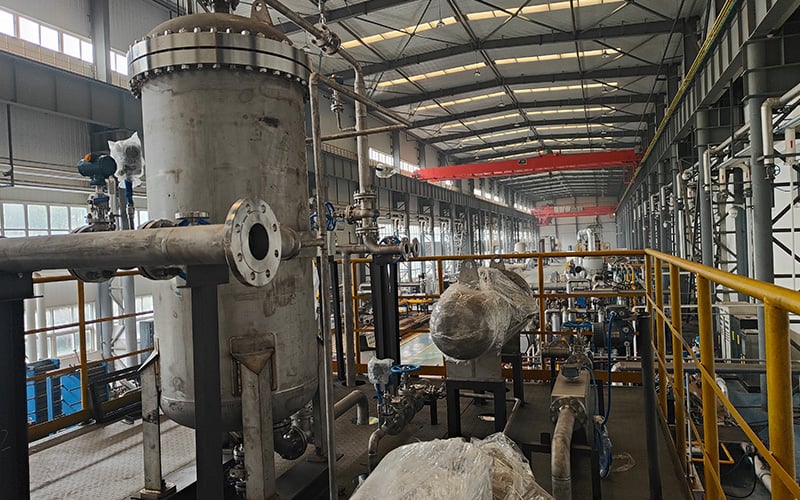
The purpose of this pilot plant is to study the heat transfer characteristics of various types of heat exchangers, providing a basis for design and manufacturing.Main Equipment:
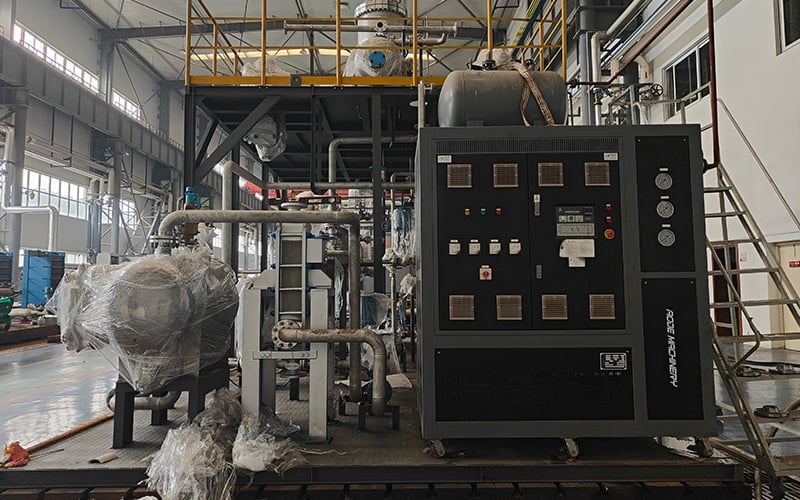
Tube condenser, subcooler, preheater, plate-and-shell evaporator, separator, working fluid tank, hot water tank, pumps, mass flowmeter, pressure gauges, self-acting valves, safety valves, manual valves, electric control valves, hot oil system, distribution cabinet, instrumentation cabinet, etc.
Process Description:
The working fluid is charged from an external supply tank (using pentane) into the working fluid tank. During maintenance or shutdown, the working fluid is discharged into a storage tank. The working fluid in the tank is pumped and first enters the preheater to be heated to 74°C, then enters the boiling test unit (plate-and-shell evaporator) for evaporation. The vapor phase enters the separator, then the vapor from the separator enters the condensation test prototype to be cooled to 73°C. The condensed liquid and the liquid phase from the separator are combined and enter the subcooler to be cooled to 70°C before returning to the working fluid tank.
The water from the hot water tank is pumped to the heat-conducting oil heater and heated to 88-107°C. One stream goes to the boiling test unit for heating, and the other stream goes to the preheater for heating the working fluid. The return water from both streams is combined and returned to the hot water tank.
The vacuum at the outlet of the working fluid tank, boiling test unit, separator, and condensation test prototype is maintained by a vacuum pump.
The cooling of the condensation test prototype is achieved through the circulation of cooling water pumps. The circulating liquid is cooled by a circulating water cooler, which is cooled by cooling water.
Skid Composition:
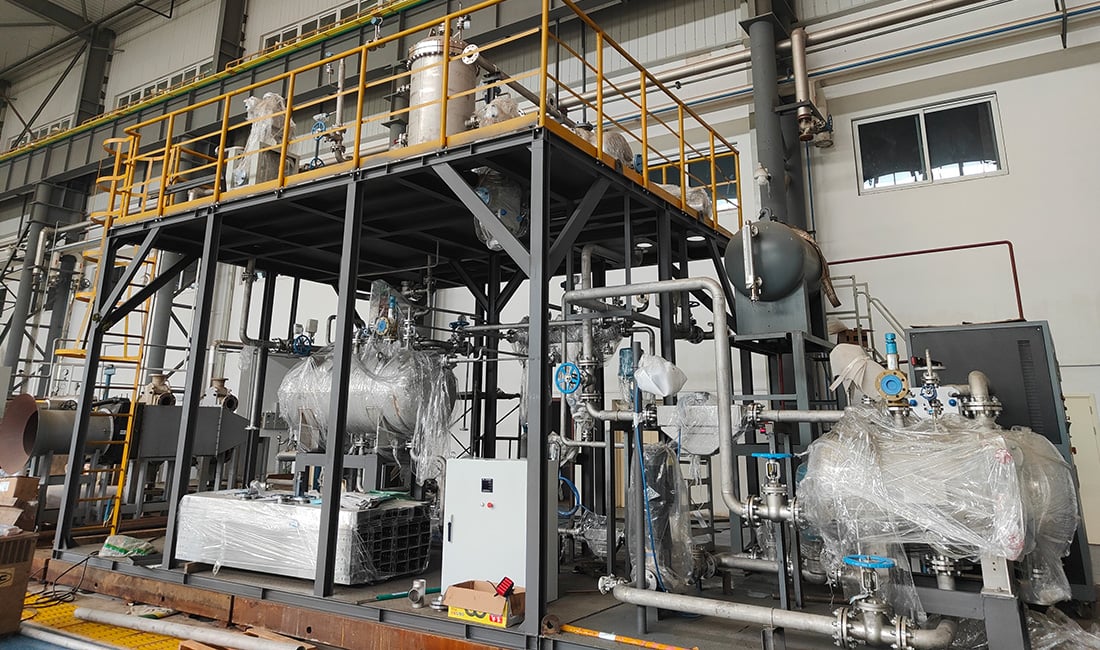
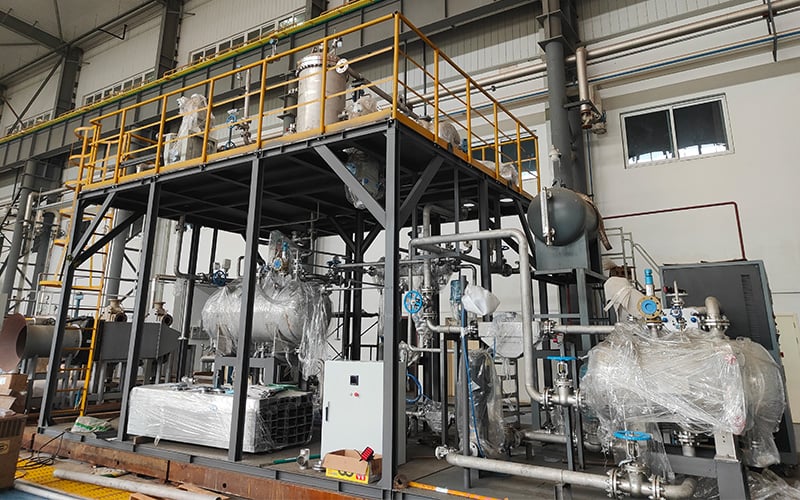
Considering factors such as transportation and lifting, the skid is mainly composed of three parts, which are structurally connected by bolts and welding. Two parts are two-story, and one part is single-story.
Framework 1: 6 meters (length) × 3 meters (width), two stories, with a floor height of 3.5 meters.
Framework 2: 6 meters (length) × 1.5 meters (width), two stories, with a floor height of 3.5 meters.
Chassis 3: 3 meters (length) × 4.5 meters (width), single story.
A vertical ladder is provided.
 English
  Spanish
  Russian