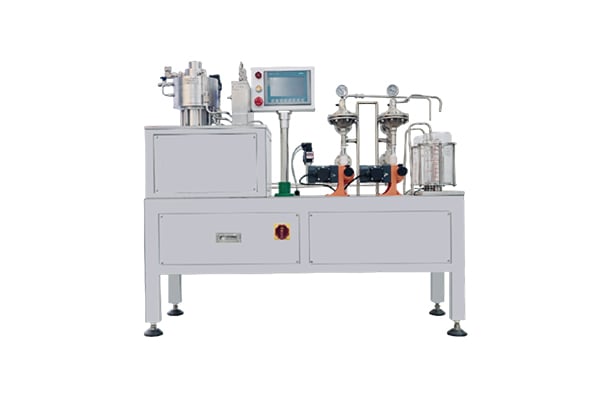
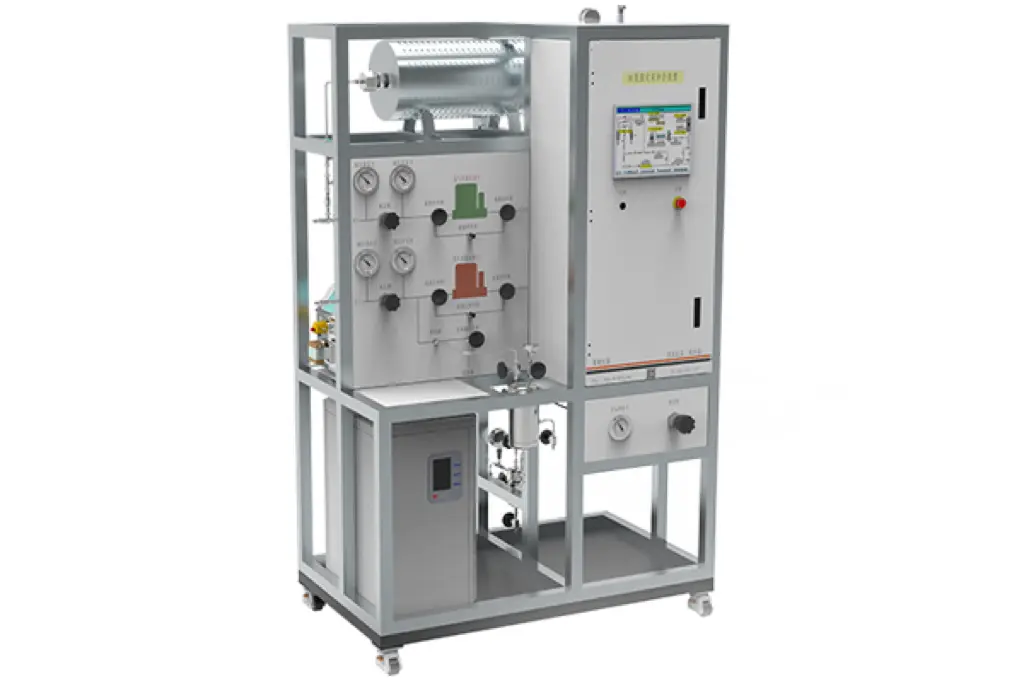
Dynamic Disk Microreactor
Features:
• Internal high-shear structure with high-speed impeller ensures uniform mixing of materials and high product stability;
• Suitable for viscous liquids and reactions involving or generating solid phases, capable of handling suspensions with highly efficient mixing, enabling formation of micro- and nano-particles to enhance reaction efficiency and prevent clogging.
Description:
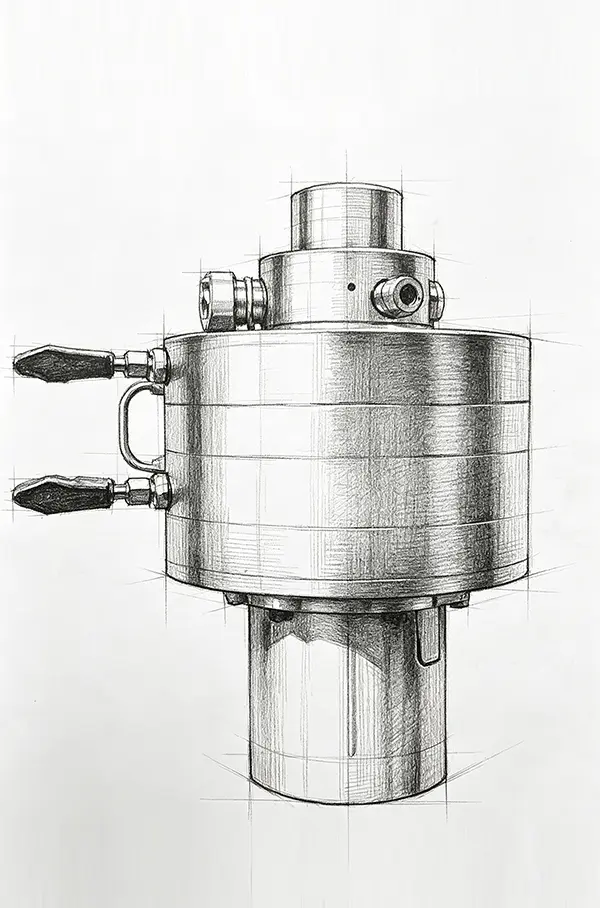
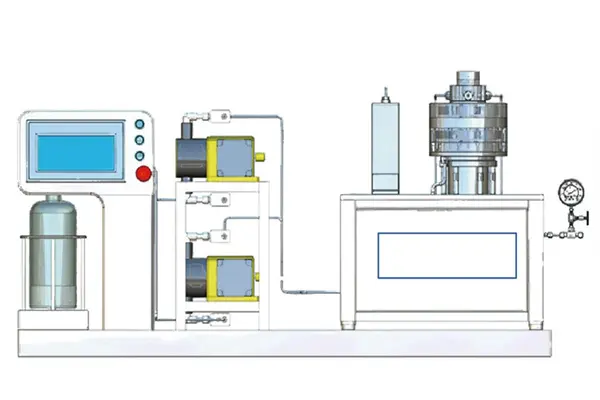
Disc-type microreactors utilize high-speed rotation to generate a stable and easily controllable centrifugal force field, overcoming the limitations imposed by conventional gravitational fields on mass transfer rates and simulating a hypergravity environment. They are used to enhance molecular diffusion and interphase mass transfer between molecules of different sizes. The gap between the stationary outer shell and the high-speed rotating disc is only 0.5–2 mm. Under a gravitational field 100 times stronger than Earth’s and under the influence of immense shear forces, gas-liquid, liquid-liquid, and liquid-solid mixtures are torn into nanoscale films, filaments, and droplets. This rapidly renews the interfacial surfaces, enabling highly efficient mass transfer at the microscopic level.
Product Details:
| Material States Accommodated | Gas-Liquid-Solid Three-Phase |
| Main Material | Stainless Steel 316L (Other options: Silicon Carbide, Hastelloy, C4, PTFE, etc.) |
| Channel Liquid Hold-Up (ml) | 600 |
| Process Throughput (ml/min) | 1600-16000 |
| Solid Content Compatibility (%) | 0-40% |
| Annual Processing Capacity (t/year) (24-hour operation) |
8000 |
| Working Temperature (℃) | -70~200℃ (Customizable up to 300℃) |
| Working Pressure (MPa) | 2 MPa (Adjustable per customer process requirements) |
| Sealing Type | Magnetic Seal |
| Heat Exchange Method | Internal and External Jackets |
Application:
| Reaction Type | Examples of Reactions | Advantages of Microcanal Reactors |
|---|---|---|
| Bromination | Methyl Bromination | Excellent control over the monobromination ratio |
| Addition to Double Bonds | Virtually quantitative reaction | |
| Hydroxyl Bromination | Excellent control over isomerization impurities | |
| Chlorination | Alkane Chlorination | Higher selectivity than conventional reactors |
| Benzyl Chlorination | Higher selectivity than conventional reactors | |
| Heterocyclic Chlorination | Higher selectivity than conventional reactors | |
| Nitration | Nitration of Alcohols and Amines | Significant reduction in oxidation impurities |
| Nitration of Benzene Rings and Heterocycles | Excellent control over dinitration and oxidation impurities | |
| Low-temperature reaction | Low-Temperature Halogenation and Addition | No cryogenic cooling required; significantly improved yield |
| Low-Temperature Dechlorination and Addition | No cryogenic cooling required; very rapid reaction with high yield | |
| Hydrogenation | Hydrogenation of Double Bonds | Effectively reduces over-reduction and polymerization impurities |
| Deprotection | The reaction is fast, selectively deprotecting without reducing other easily reducible groups | |
| Reduction of Alkynes | Can selectively reduce to alkenes | |
| Reduction of Carbonyl Groups | Reduced catalyst consumption and increased number of reuses | |
| Oxidation | Oxidation of Hydroxyl Groups | High selectivity with reduced other impurities |
| Oxidation of Methylene Groups to Ketones | Selective oxidation of the α-methylene group in alkenes, offering higher selectivity and safety | |
| Oxidation of Alkenes to Diols | Significant increase in selectivity | |
| Oxidative Elimination Reactions | Allows the use of low-boiling-point, easily recoverable solvents with nearly quantitative conversion | |
| Other | Michael Addition Reactions | Increased selectivity and reduced polymerization |
| Proton-Catalyzed Cyclization | Reduced dimerization and isomerization, with a significant increase in yield | |
| Suzuki Coupling | Increased yield | |
| Coupling of Azo Compounds | Reduced azo decomposition, with yields potentially reaching 100% |
| Industry | Reaction Type | Reaction Materials Involved in Continuous Applications |
|---|---|---|
| Pharmaceuticals and Intermediates | Nitration | Solvents: nitric acid, acetic acid, dichloromethane, dichloroethane, acetic acid, acetic anhydride |
| Dichloroethane, etc. | ||
| Nitrating agents: fuming nitric acid, sulfuric acid, dinitrogen pentoxide | ||
| Pesticides and Intermediates | Diazonation | Phenylhydrazine, sodium nitrite, hydrochloric acid, sulfuric acid, methylpyridine, solid-liquid reactions |
| New Materials | Oxidation | Phosphotungstic acid, hydrogen peroxide, sodium hypochlorite, oxidation of hydroxyl groups, oxidation of methylene groups to ketones |
| Oxidation of alkenes to diols, oxidative elimination reactions | ||
| New Energy | Bromination | Methyl bromination, addition to double bonds, hydroxyl bromination |
| Dyes and Pigments | Chlorination | Alkanes, benzyl groups, chlorine gas, chlorination of heterocycles |
| Flavors and Fragrances | Hydrogenation | Hydrogenation of double bonds, deprotection, reduction of alkenes, reduction of carbon groups |
| Defense Industry | Alkylation | Methanol, ethanol, propanol, butanol, acetic acid, propionic acid, halides |
| Fine Chemicals | Halogenation | Chlorobenzene, bromoacrylonitrile, iodoethanol |
| Nanomaterials | Fluorination | Fluoroethylene, fluoroacetone, fluoroaniline, fluoroacetic acid |
| Cosmetics Industry | Esterification | Esterification reactions of fatty acids and polyols such as pentaerythritol; ethyl acetate, butyl propionate |
| Sulfonation | Benzene, ethanol, n-butane, concentrated sulfuric acid, or fuming nitric acid | |
| Grignard reaction | Reaction of bromoethane with magnesium to produce ethyl Grignard reagent | |
| Solid-liquid reaction | Nitromethane, iron phosphate production, IVD microsphere preparation, pharmaceutical microsphere preparation | |
| Gas-liquid reaction | Oxidation reactions, hydrogenation reactions, etc. |
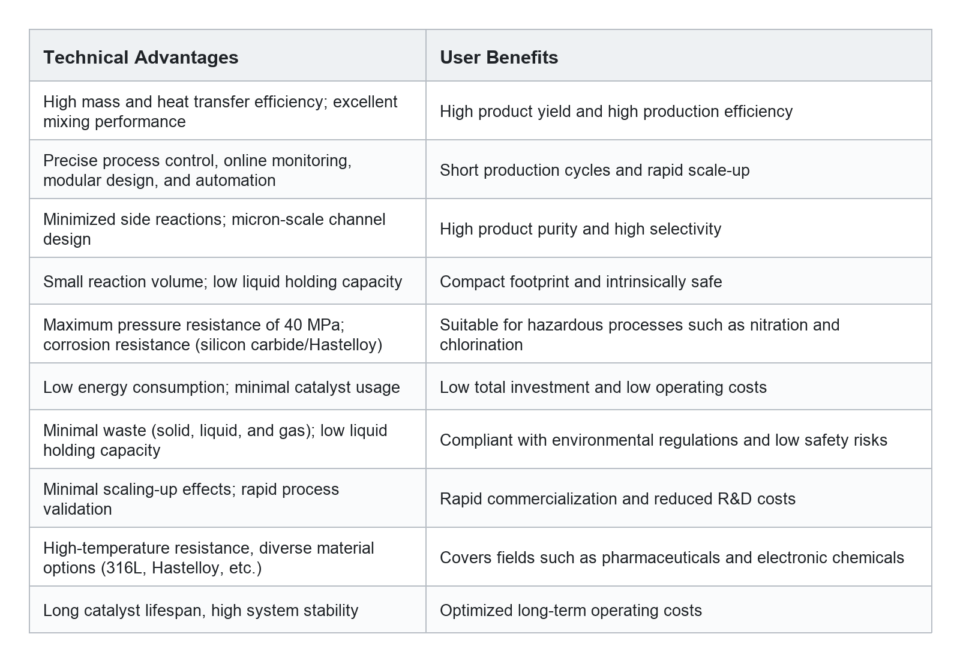
Advantages:
Faq
{acf_faq_list_faq-txt}
We support you 24/7
Our expertise is here to serve you
We take every question and need of yours seriously. Feel free to contact us!
Over 20 years of experience in welding special alloys
100% RT&full material traceability
Integrated delivery from simulation to FAT
 English
  Spanish
  Russian