Wiped Film Evaporator: The “Tough Guy” of Chemical Engineering
Jump to section
In chemical production, some liquids are particularly difficult to handle:
- Too viscous — Like honey, asphalt, or even glue, they refuse to flow.
- Too heat-sensitive — They degrade when heated and cannot tolerate prolonged exposure.
- Too dirty — They tend to form hard deposits (scaling) on the vessel walls, clogging equipment.
For these “hard bones,” traditional falling film evaporators are no longer sufficient. This is where the wiped film evaporator comes into play. Its working principle can be summarized in four words: forced film scraping.
I. Macro Perspective — A Giant “Electric Mixing Cup”
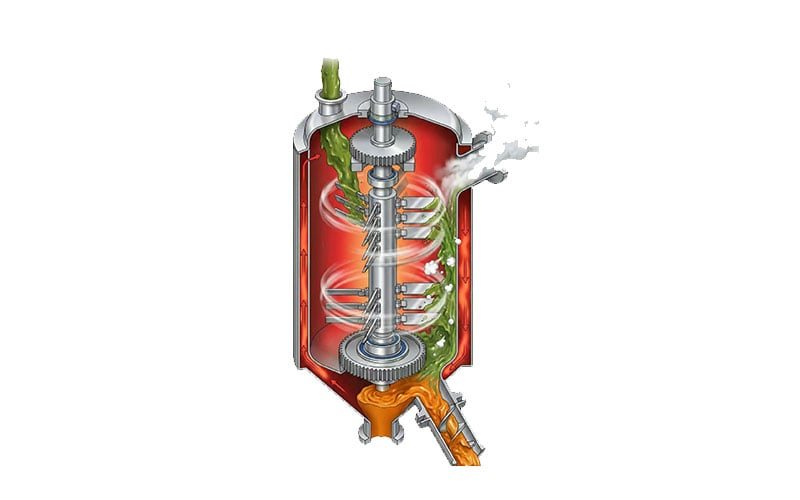
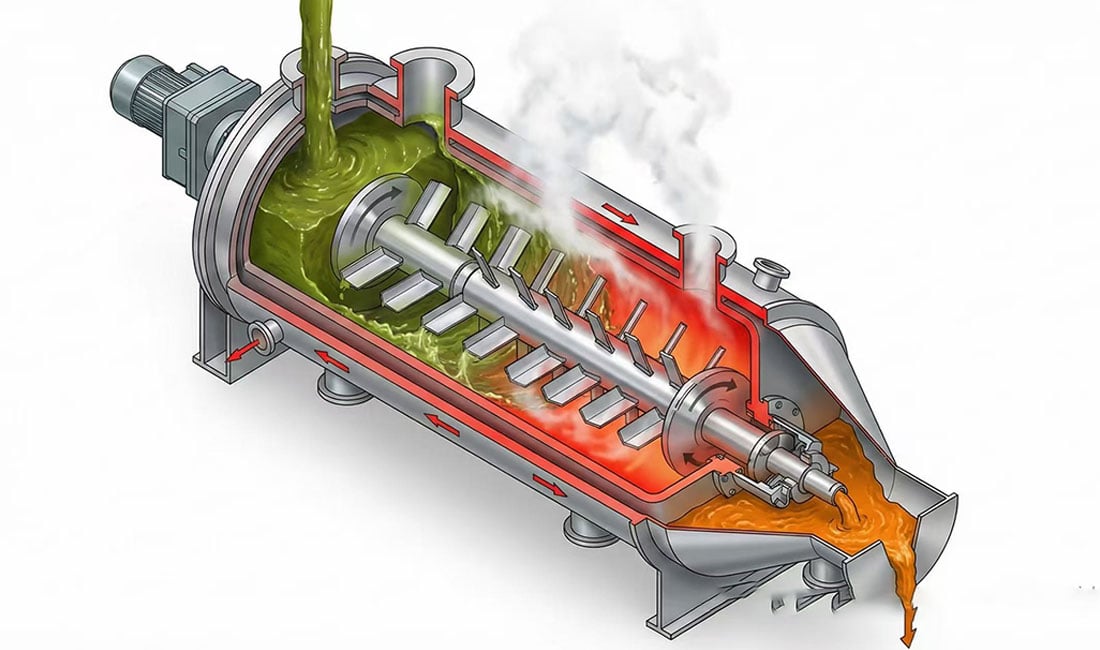
Feedstock (green viscous liquid): Viscous material enters from the top. Relying on gravity alone, it would take a very long time to flow through.
Rotating Core (high-speed rotor): Inside, a rapidly spinning shaft acts like a tornado, capturing the incoming liquid and flinging it outward against the heated wall by centrifugal force.
Result (orange concentrate): The liquid is forced to flow downward. Before it can adhere to the wall, the solvent evaporates, and the concentrated product exits from the bottom.
II. Microscopic Mechanism — High-Speed “Pancake Spreading”
This top view reveals the secret behind the evaporator’s high efficiency.
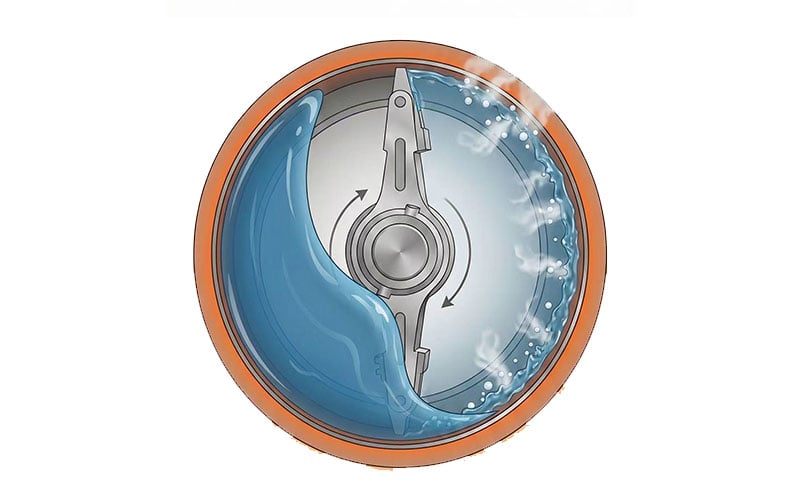
Wiper Blade: The metal blade pressed against the wall functions like a car’s windshield wiper or a master’s spatula used in pancake-making.
Extremely Thin Film (blue fluid): The liquid would naturally tend to clump together, but the blade swiftly spreads it into an ultra-thin film on the heated surface.
Instantaneous Evaporation: Because the film is extremely thin (only a few tenths of a millimeter), heat penetrates instantly, and the solvent immediately vaporizes into bubbles that escape.
III. Core Feature — The Uncloggable “Pooper-Scooper”
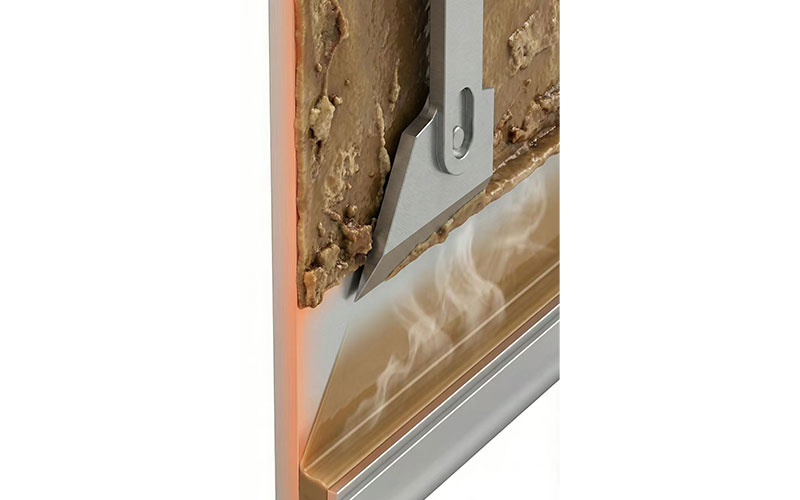
This is the most valuable aspect of the equipment. When processing dirty, scale-prone materials, it demonstrates its “brutal” side.
Stubborn Deposits (brown fouling): Some materials, upon heating, attempt to form a hard crust on the wall — like the burnt residue at the bottom of a pot. Once scaling occurs, heat transfer is severely impaired.
Forced Cleaning (metal wiper blade): But the wiper disagrees! It scrapes across the wall dozens of times per second, acting like a sharp shovel, forcibly removing anything that tries to stick to the wall and pushing it downward.
Continuous Renewal: The area just below where the blade has passed reveals a clean metal surface and a fresh liquid film; above the blade is the thick sludge awaiting treatment.
Summary
| Type | Driving Force | Suitable For |
| Falling Film Evaporator | Gentle gravity flow | Liquids with good fluidity (e.g., water, milk) |
| Wiped Film Evaporator | Forced mechanical scraping | Viscous, scale-prone liquids (e.g., adhesives, paints) |
Although wiped film evaporators are more expensive and energy-intensive (due to the motor), for those “stubborn materials” that give engineers headaches, they are the only viable solution.
Want to Know More About Our Products?
View All Products Now English
  Spanish
  Russian