Regeneration Solution for Waste Lubricating Oil
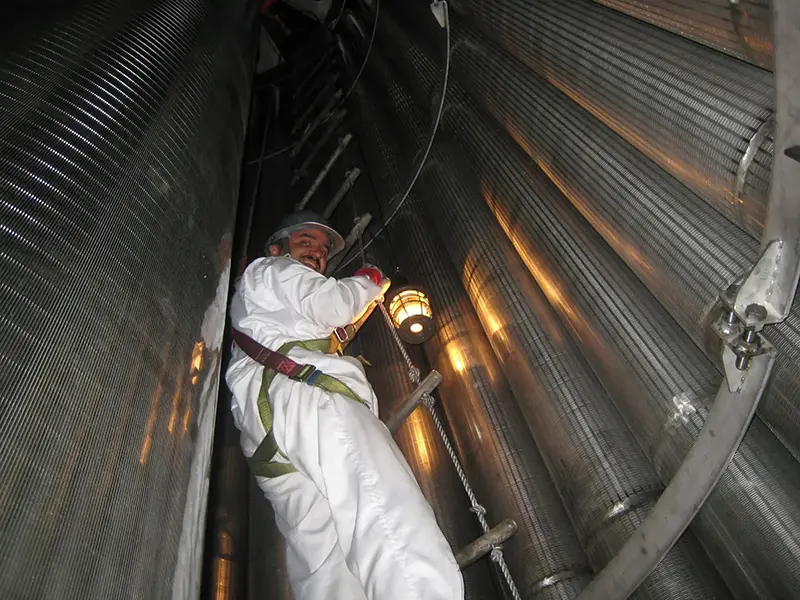
We design and fabricate reactor and column internals, including liquid and vapor
Problem to Solve: A biopharmaceutical enterprise needed to perform low-temperature desalination and concentration treatment on the fermentation broth supernatant during the production of recombinant human insulin. Insulin is an extremely temperature-sensitive protein, and the traditional evaporation process was prone to causing protein denaturation, resulting in severe loss of insulin activity. Moreover, the traditional freeze-drying process adopted by the enterprise had the problems of long processing time, high energy consumption, and large equipment investment, which restricted the improvement of production efficiency and economic benefits and could not fully meet the GMP production requirements.
Solution Implementation: Aiming at the characteristics of insulin and the defects of the traditional process, the enterprise adopted a scraped surface evaporator to establish a low-temperature solvent removal system suitable for biopharmaceutical production. The system configuration included a scraped surface evaporator (with a heat transfer area of 5m²), a cryogenic condenser, a vacuum system, and a precise control system. The core process parameters were strictly controlled to ensure low-temperature and gentle treatment: feed temperature was maintained at 20–25℃, vacuum degree at 1–5 mmHg, scraper speed at 100–150 rpm, and heating medium temperature at 25–30℃. The scraped surface evaporator realized low-temperature evaporation and concentration under high vacuum conditions, avoiding protein denaturation while completing solvent removal and desalination.
Solution Effect & Process Comparison: The solution achieved excellent application effects in recombinant human insulin production: the insulin concentration multiple reached 20 times, the activity retention rate exceeded 95%, and the product purity reached more than 99.5%. The product had good batch consistency, fully meeting the GMP production requirements of biopharmaceuticals.
Compared with the traditional freeze-drying process, the advantages of the solution were extremely prominent: the processing time was shortened from 24–48 hours to 2–3 hours, and the production efficiency was increased by 10–20 times; energy consumption was reduced by more than 60%, and equipment investment was reduced by 50%, significantly reducing production costs. The annual processing capacity of the system reached 1000 liters, and the product yield was increased by 8 percentage points compared with the traditional process, adding about 5 million yuan in annual revenue for the enterprise, achieving a win-win situation of improved product quality, increased efficiency, and cost reduction.

Related Solution
Explore industry-proven solutions tailored to your conditions, delivering reliable performance and lasting value.
 English English
  Spanish
 Russian