South Korean New Energy Battery Project
I. Название проекта:
Various Hoppers Used in the Production Process of New Energy Battery ElectrolyteII. Расположение:
Южная КореяIII. Дата завершения:
June 2024 (Subsequent continuous cooperation with new orders to date)
Основное оборудование:
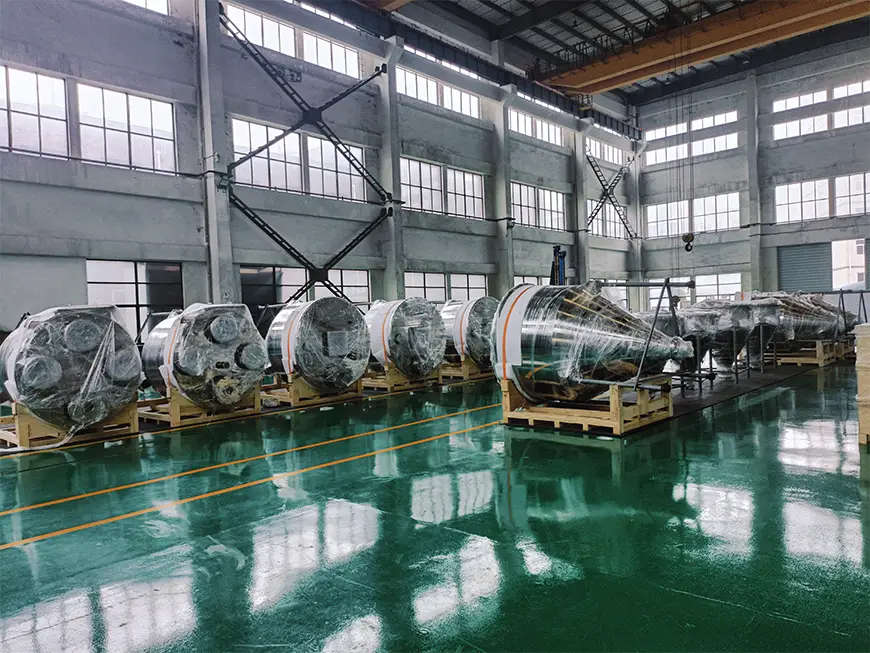
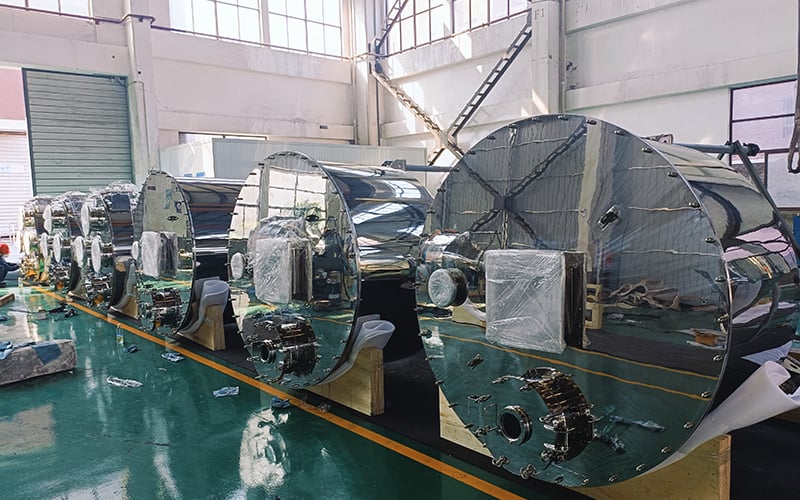
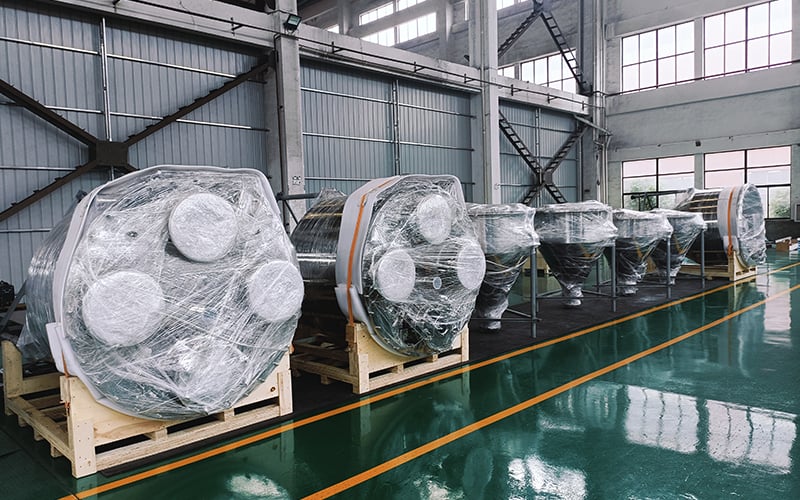
Main Storage Hopper, Main Discharge Hopper, Binder Discharge Hopper, CMC Discharge Hopper, Dumping Hopper, Binder & CMC Input Hopper, Job Change Hopper, etc.
Material and Processing Technology Requirements:
For the material and surface finish requirements of equipment used in electrolyte production, the core logic is “corrosion resistance, contamination prevention, and reaction prevention.” Since electrolytes produce highly corrosive hydrofluoric acid when in contact with water and are extremely sensitive to metal ions, material selection and surface treatment directly determine the success of the product.
The following are specific stringent requirements:
- Material Selection (Strict Control of Metal Leaching):
- All parts in contact with the material must not use copper, zinc, or iron (which can catalyze decomposition), with mainstream materials being 304 and 316 stainless steel.
- Seals and pipe linings must be made of PTFE (polytetrafluoroethylene) or PFA (perfluoroalkoxy resin), eliminating the risk of organic matter leaching from rubber or ordinary plastics.
- Surface Finish Requirements (Prevention of Residue and Cleaning):
- The inner surface in contact with the material must be polished, with a roughness requirement of Ra ≤ 0.8μm (usually achieving 0.2~0.3μm).
- Welding and Dead Corner Control:
- Pipe connections should preferably use automatic welding, with the inner wall welds passivated and smooth (Ra ≤ 0.8μm).
- The interior of the tank must not have right angles or threaded connections, and must be designed with large-radius transitions (R ≥ 5mm) to prevent material accumulation and stratification in dead corners.
- Interior Surface Polishing to Ra ≤ 0.8μm:
- Specific process as follows:
- Step 1: Rough Grinding (Removal of Oxide Scale)
Use resin-bonded grinding wheels or 80#~120# flap wheels to remove oxide scale and cutting burrs from welds. The speed is about 2000rpm, aiming to reduce Ra to 3.2μm. Pay attention to controlling the feed rate to prevent local overheating and “grinding burns.” - Step 2: Semi-Finish Grinding (Rounding)
Use 240#~320# oil stones or sandpaper to completely eliminate the scratches left from the previous step. The target Ra is reduced to 0.8~1.6μm. This stage is the most critical and requires ensuring cross-grain patterns (reversal angle 60°~90°). - Step 3: Fine Grinding (Polishing Prelude)
Use 400#~600# fiber polishing wheels or hemp wheels with green polishing compound to achieve a mirror-like finish visible to the naked eye, stabilizing the target Ra at 0.4~0.6μm. This process requires the surface to be free of any “hanging threads” or “vibration patterns.” - Step 4: Final Inspection and Cleaning
First, use deionized water for high-pressure rinsing, then dehydrate with alcohol or acetone, and finally wipe dry with a lint-free cloth. Use a roughness gauge to sample and test (usually take 3~5 points to calculate the average).
- Step 1: Rough Grinding (Removal of Oxide Scale)
- Specific process as follows:
Сценарии применения:
Used for the production of new energy battery electrolyte at YUNSUNG F&C Co., Ltd. in South Korea.
Ekaislot’s Manufacturing Advantages:
Ekaislot has the qualifications for pressure vessel manufacturing, with 14 years of equipment design and manufacturing experience, complete processing equipment, experienced engineering technicians, and skilled workers. Especially since 2023, Ekaislot has been producing screen filters and magnetic filters for South Korean new energy companies, accumulating rich production technology experience and being familiar with South Korean product standards and technical requirements.
 English
  Spanish
  Russian